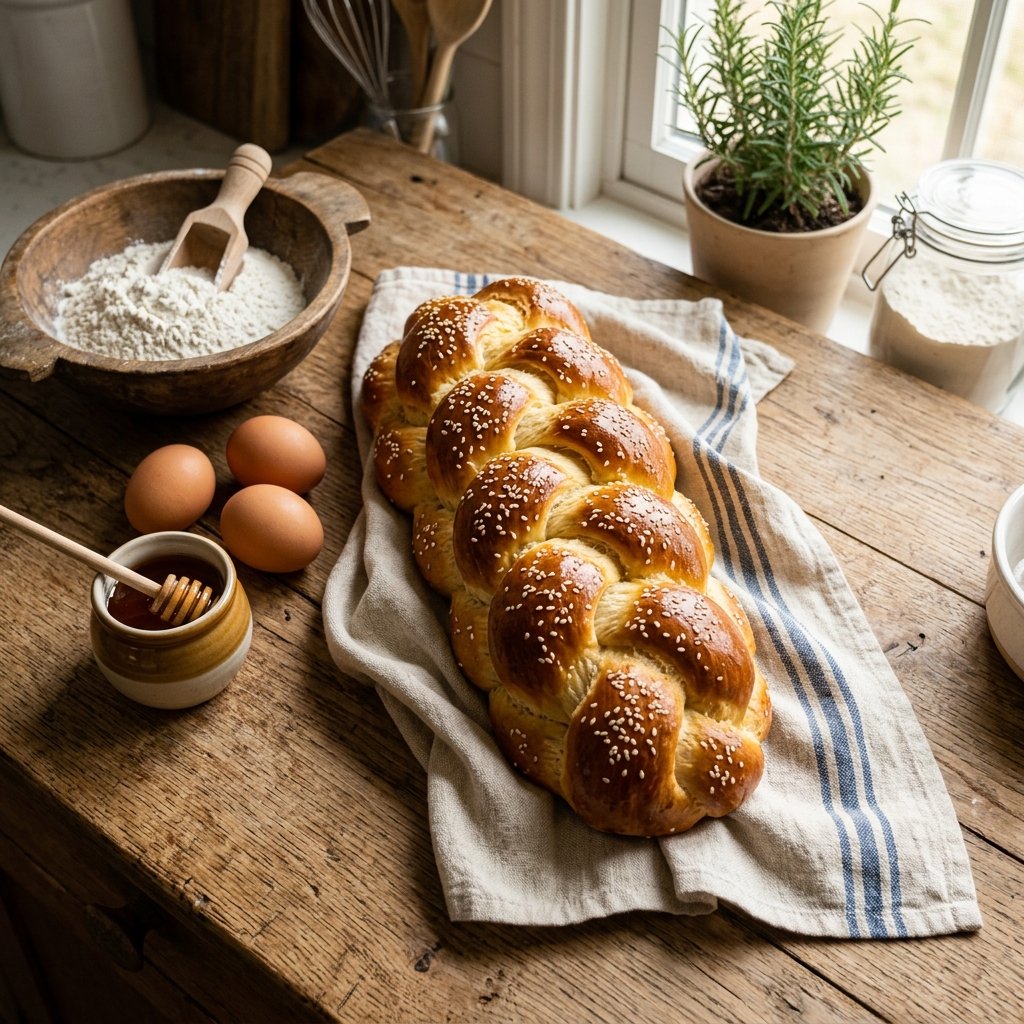
This golden, pillowy bread has been a staple at tables for generations, representing both history and comfort in every slice.
The Art of the Braid
The most iconic feature of this bread is its intricate braid. Beyond making the loaf look like a work of art, the braiding process serves a practical purpose.
It allows the dough to rise evenly, creating a texture that is light, airy, and slightly sweet. Whether you are a beginner or a seasoned baker, learning the craft of braiding is a rewarding experience. If you are looking to master this skill, you can find a simple guide into baking challah bread that breaks down the steps into manageable parts.
Why Challah Stays Relevant
In 2026, many people are returning to traditional baking methods to find a sense of calm in their busy lives.
Challah is the perfect project for this. It uses simple pantry staples like flour, yeast, eggs, and oil, yet the result feels incredibly luxurious. Because it is an enriched dough, it stays soft for days, making it ideal for everything from morning toast to hearty sandwiches.
Making It Your Own
While the classic version is delicious on its own, you can easily customize your loaf. Many bakers choose to sprinkle poppy or sesame seeds on top for extra crunch.
Others experiment with fillings, adding raisins or cinnamon to the dough before braiding for a dessert-like treat. The versatility of the recipe is a huge part of why it remains a beloved classic.
Frequently Asked Questions
What makes challah different from other breads? Challah is an enriched dough made with eggs and oil, which gives it a rich flavor and a soft, tender crumb that distinguishes it from standard lean breads.
Can I freeze the dough? Yes, you can freeze the dough after the first rise. Just let it thaw completely in the refrigerator before shaping and baking.
How do I get that perfect golden crust? An egg wash applied just before baking is the secret to achieving that deep, glossy, golden-brown finish.
Is it hard to braid? It might look complex, but once you practice a few times, braiding becomes second nature. It is a fun, rhythmic process.